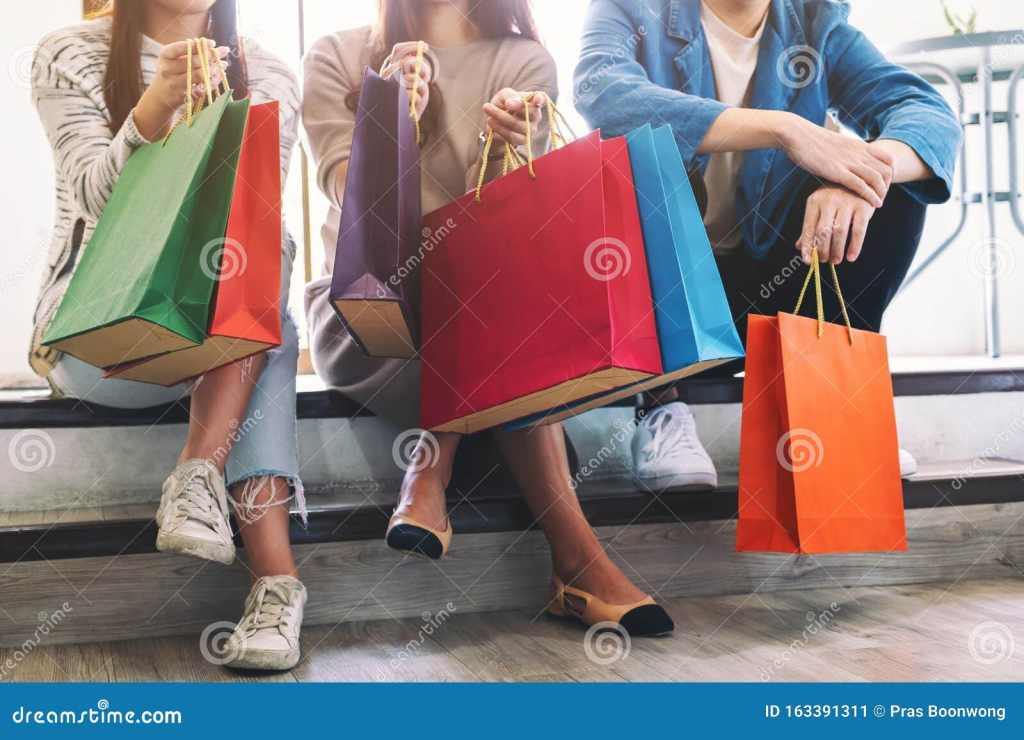
By: Fran Martin
What is a shopaholic exactly? The word alcoholic refers to someone who has a serious disorder. Addictive shopping can be serious, too, but the word shopaholic is most often used playfully to suggest mere excess rather than true addiction. Shopaholic first appeared in print in 1977. It was formed on the model of alcoholic, which was itself created many years earlier by combining alcohol with -ic, meaning “of or relating to.” People evidently saw a parallel between someone addicted to alcohol and someone “addicted” to shopping. This is not the first time alcoholic has spawned a spinoff word-shopaholic was preceded by workaholic and chocoholic, both of which first turned up in 1968. The fact that compulsive shopping disorder is not listed in the “Diagnostic and Statistical Manual of Mental Disorders” (DSM-5), makes the condition difficult to diagnose. Compulsive Shopping Disorder is defined by a preoccupation with buying and shopping, by frequent buying episodes, or overpowering urges to buy that are experienced as irresistible and senseless. The maladaptive spending behavior is associated with serious psychological, social, occupational, and financial problems.
Oniomania (compulsive shopping, or what’s more commonly referred to as shopping addiction) is perhaps the most socially acceptable addiction. Think about it: We are surrounded by advertising that tells us that buying will make us happy.
We are encouraged by politicians to spend as a way of boosting the economy. And, for some of us, there is an allure of wanting what everyone else seems to have. Consumerism, by our own intentions or not (or some combination), has become a measure of social worth.
Almost everyone shops to some degree, but only about 6% of the U.S. population is thought to have a shopping addiction.
Although widespread consumerism has escalated recently, shopping addiction is not a new disorder. It was recognized as far back as the early nineteenth century and was cited as a psychiatric disorder in the early twentieth century.
Signs that a person might have a shopping addiction include:
- Always thinking about things they plan to purchase
- Being unable to stop their compulsive shopping
- Experiencing a rush of euphoria after buying something
- Feeling regret or guilt about things they have purchased
- Financial problems or an inability to pay off debts
- Lying about things they have bought or hiding their purchases
- Opening new credit cards without paying off balances on existing cards
- Purchasing things they don’t need
- Shopping when they are stressed or sad
People who struggle with shopping addiction typically spend more time and money on shopping than they can afford, and many get into financial problems as a result of their overspending.
Shopping addiction can involve impulsive and compulsive spending, producing a temporary high. People addicted to shopping often feel empty and unsatisfied with their purchases when they get home.
Items purchased during a compulsive shopping spree are often hoarded unused, and compulsive shoppers begin to plan their next spending spree. Most shop alone, although some shop with others who enjoy it. Generally, shopping with people who don’t share this type of enthusiasm for shopping will lead to embarrassment.
Causes of Shopping Addiction
The exact causes of shopping addiction on not entirely clear, but several factors may play a role.
Other Mental Health Conditions
Usually beginning in one’s late teens and early adulthood, shopping addiction often co-occurs with other disorders, including mood and anxiety disorders, substance use disorder, eating disorders, other impulse control disorders, and personality disorders.
Personality Characteristics
This difficulty in controlling the desire to shop emerges from a personality pattern that shopaholics share, and that differentiates them from most other people. Often low in self-esteem, they are easily influenced, and are often kindhearted, sympathetic, and polite to others, although they are often lonely and isolated. Shopping gives them a way to seek out contact with others.
Some people develop shopping addiction to try and boost their self-esteem, although it doesn’t tend to be very effective for this.
Materialism
People with shopping addiction tend to be more materialistic than other shoppers and try to prop themselves up by seeking status through material objects and seeking approval from others. They engage in fantasy more than other people, and—as with other people with addictions—have difficulty resisting their impulses.
Exposure to Advertising
People with a shopping addiction may be more susceptible to marketing and advertising messages that surround us daily. While advertising, in general, is designed to exaggerate the positive results of purchase and suggest that the purchase will lead to an escape from life’s problems, certain marketing tricks are designed to trigger impulse buying and specifically target the impulsive nature of people with a shopping addiction.
Retail Therapy
As with other addictions, shopping addiction is usually a way of coping with life’s emotional pain and difficulty. Unfortunately, it tends to make things worse rather than better for the shopper.
People who gain pleasure and escape negative feelings through shopping sometimes call it “retail therapy.” This phrase implies that you can get the same benefit from buying yourself something as you would from engaging in counseling or therapy. This is an incorrect and unhelpful idea.
While the term retail therapy is often used in a tongue-in-cheek manner, some people, including shopaholics, actively make time to shop simply as a way to cope with negative feelings.
Although there are circumstances when a new purchase can solve a problem, this is not typically thought of as retail therapy. Usually, the things people buy when engaging in retail therapy are unnecessary, and the corresponding financial cost may reduce resources for solving other life problems.
Normal Shopping vs. Shopping Addiction
So what is the difference between normal shopping, occasional splurges, and shopping addiction? As with all addictions, what sets shopping addiction apart from other types of shopping is that the behavior becomes the person’s main way of coping with stress. People will continue to shop excessively even when it is hurting other areas of their life.
Normal Shopping
- Purchased items are needed and used
- No sense of compulsion
- Does not cause financial distress
- Occasional splurges
Shopping Addiction
- Purchased items are often not needed or used
- Compulsive shopping behavior
- Creates financial problems for the individual
- Constant overbuying
As with other addictions, money problems can develop and relationships can become damaged, yet people with shopping addiction (sometimes called “shopaholics”) feel unable to stop or even control their spending.
Online shopping addiction is a form of internet addiction, and people with social anxiety are particularly vulnerable to developing this type, as it does not require any face-to-face contact. Like other cyber addictions, it feels anonymous.
Compulsive vs. Impulsive Shopping
Impulse buying is an unplanned purchase that happens on the spur of the moment in reaction to the immediate desire to have something you see in a shop. Impulse buying is a little different from compulsive buying, which is typically more pre-planned as a way of escaping negative feelings. But again, people with shopping addiction may engage in both types of addictive buying.
Exposure to Advertising
People with a shopping addiction may be more susceptible to marketing and advertising messages that surround us daily. While advertising, in general, is designed to exaggerate the positive results of purchase and suggest that the purchase will lead to an escape from life’s problems, certain marketing tricks are designed to trigger impulse buying and specifically target the impulsive nature of people with a shopping addiction.
How to Cope With Shopping Addiction
Overcoming any addiction requires learning alternative ways of handling the stress and distress of everyday existence. This can be done independently, but people often benefit from counseling or therapy.
In the meantime, there is a lot you can do to reduce the harm of compulsive spending and get the problematic behavior under control. Developing your own spending plan can be a good first step.
Other steps you can take that might help include:
- Develop other coping strategies: Finding alternative ways of enjoying your leisure time is essential to breaking the cycle of using shopping as a way of trying to feel better about yourself.
- Enlist the help of others: If someone else in your family can take responsibility for shopping for essentials, such as food and household items, it can help to delegate the responsibility to them, at least temporarily, while you seek help.
- Limit access to credit and cash: It is a good idea to get rid of credit cards and keep only a small amount of emergency cash on you, so you can’t impulse buy.
- Don’t shop with other compulsive shoppers: Shopping only with friends or relatives who do not compulsively spend is also a good idea, as they can help curb your spending.
My Journey
For my self and my own journey through being a shopaholic I used it as a way to feel good and avoid negative feelings, such as anxiety and depression. Like other behavioral addictions, shopping addiction can take over as a preoccupation that leads to problems in other areas of your life. Shopping did at one point in time lead to problems in other areas of my life.
I can remember when I first started college at Western Connecticut State University, there was a college fair going on the weekend before school started back up in session. I can remember it like it was yesterday there was a man sitting at a booth and the sign at his stand said, There are some things money can’t buy. For everything else, there’s MasterCard.” In my mind and gut I knew that I should not sign up for the Mastercard. I did anyways and my limit on it was five hundred dollars. I told myself that I would only use it for emergencies but that didn’t work. I suddenly found myself going wild with it. I felt like I was high when I would use it.
Next thing I knew I had been hooked with the Mastercard maxed out I needed more credit cards I thought. I also thought how incredible is it that a store will give you free money and I didn’t really stop to think to myself that it is not free money that you have to pay it back not only that but with interest too. So I went to the mall shortly after I ran out of money on the Mastercard and applied for a Gap, Limited, Victoria’s Secret, Filene’s, Macy’s and a few others that I can’t remember. So now here I was having opened up six credit cards and maybe two more that I can’t remember with no money to pay them back. I was working at the Danbury YMCA as a lifeguard and swimming instructor and di not make that much money at the time. I was 20 years old and the only bills that I had before credit card were gas for my car, car insurance and spending money on whatever I needed.
I freaked out when my first bills came in the mail. I immediately panicked because I had all these bills at once and couldn’t pay them. I remember asking my parents for money to help me out and I was so embarrassed to tell them that I had done this. I knew they would be so disappointed in me. My mom said that she would not help me out that this was my mess that I created and I had to figure out a way to pay them back. I freaked out. That was the moment that I realized that I couldn’t ever ask my parents for money that I was old enough to support myself and I needed to figure this out and fast. I never asked them for a dime since.
I managed to get the money together to pay them back the bare minimum and some of them I didn’t have the exact minimum amount that they needed so I payed less and soon learned that the percentage rates went sky high and now I would have to pay even more money back.
Even though I couldn’t afford them, I still continued to use them until I maxed out all of the credit cards. I never was taught about money and credit cards its not my parents fault I just don’t think they were thinking in those terms. I don’t fault them for that. Then I learned quickly about credit scores and how if you don’t pay your credit card debt on time or just don’t pay it that your credit score can go way down not allowing you to get things that are important in the future like a car or a house, big purchases that need good credit scores. I didn’t want a low credit score what was I to do.
So, I went to Newtown Savings Bank where I bank and I had to take out a $2000.00 dollar personal loan. I closed all of my credit cards and starting making payments to the bank to slowly pay this off. I didn’t go and get this help until my last year of college. I continued to use my credit cards all throughout college, paying them off then jacking them right back up again. Later on in my life when I found out that I was diagnosed with Bipolar I Disorder that there was a correlation between the disorder and compulsive shopping. So I looked it up. Bipolar disorder needs to be ruled out as a cause of the excessive shopping and spending. Typically, the manic patient’s unrestrained spending corresponds to manic episodes, and is accompanied by euphoric mood, grandiosity, unrealistic plans, and often a giddy, expansive affect. In my mind my untreated diagnosis led to my being a shopaholic I wholeheartedly believe.
Later on down the road I realized that I couldn’t really save my money the way that I wanted to. I never saved. I tell my son this all the time, if I could go back to my very first job and all the jobs there after, I would never have gotten credit cards and saved seventy-five of my paychecks and spend the rest that I would have enough money to buy the house that I really want. So my husband and I teach our son all the time about how important it is to save money and we explain why credit cards are bad. We teach him about what good credit is and why it is so important. We teach him all the time about money and tell him that whatever he makes that he has to put seventy-five percent away and he can spend the rest. I think its really important to talk to your children about money and set a good example of what healthy spending looks like within your budget. They need to know these things in order to be successful in life.
Two years ago I finally got sick of it all and I closed l of my credit cards for good and took out a personal loan to pay them off. So now I don’t have anymore credit cards. I only use cash or debit card and I am saving money for a house with my husband. I promised myself that I would never ever get another credit card as long as I live. I had to learn a very hard lesson over an extended period of time. I realized that it feels good not to have a credit card and to save for something that is really important to you. I want a house more than i want a credit card.
When I would shop as soon as I pulled into the parking lot I got an instant high. The high would heighten when I would enter the store. I would get even more of a high when I would pick things up and feel them. I would get even higher when I would do the act of purchasing the product. I soon there after came off of the high feeling very guilty and ashamed of myself and would hide the bags in my trunk so my parents or my husband wouldn’t see what it was that I bought. I felt really bad about myself when I would do it but I was addicted and couldn’t stop and didn’t know how to stop. I was also embarrassed especially when I would spend all of my paycheck when I first got it and had nothing left for two weeks, this was before my son was born. Spending felt like my best friend. I soon realized that my best friend was the devil.
I have learned my lesson and I will never let myself ever get into that place ever again. It was a hard life lesson but I am glad that I went through it because i wouldn’t have the knowledge or clarity that I have about it now. I had to say good bye to my best friend the devil and I had to help myself and teach myself what a healthy shopping behavior should look like. I now budget and go to a store with a list and I don’t deviate from that list ever. If I feel myself getting a high in a store I leave and remove myself from the temptation. It is really hard even to this day but I have to for my son’s sake and my husbands sake. I have to be a responsible wife and parent when it comes to spending. I have to have enough to save and contribute. I stopped the behavior. I was buying things that I didn’t need and I thought that shopping would make me happy and it didn’t. I met all of the criteria for signs that a person might have a shopping addiction. My debt will be paid off by August of 2024 and I will be debt free at the age of 45 years old. I am proud of myself for saving myself.
When to Get Help
Compulsive shopping appears to respond well to various treatments, including:
- Medications
- Self-help books
- Self-help groups
- Financial counseling
- Cognitive-behavior therapy or CBT
Some of the personality characteristics found in the “shopaholic” personality bode well for the ability to develop and respond well to a therapeutic relationship, which is the best predictor of success in addiction treatment. It should be noted, however, that although some medications show promise, results are mixed, so they should not be considered a sole or reliable treatment.
If you believe you may have a shopping addiction, discuss possible treatments with your doctor. If your doctor doesn’t take your shopping problem seriously, you might find a psychologist more helpful (and you might reconsider your relationship with your physician all together).
The 9 Best Online Therapy Programs:
Psychotherapy
Psychotherapy can help understand the emotional roots of your shopping addiction. It can also help you find ways to overcome your tendency to use shopping to cope. These are important aspects of recovery from this confusing condition.
Your relationships may have suffered as a result of your over-shopping. Psychological support can also help you make amends and restore trust with those who may have been hurt by your behavior. You may also find that therapy helps deepen your relationships by leading you to understand better how to connect with other people in ways that don’t revolve around money.
Get Help Now
We’ve tried, tested, and written unbiased reviews of the best online therapy programs including Talkspace, BetterHelp, and ReGain. Find out which option is the best for you.
Financial Counseling
Depending on how serious your shopping addiction is, you may also find it helpful to get financial counseling, particularly if you have acquired debts by spending more than you earn.
You could make an appointment with a financial advisor or consultant at your bank to discuss options for restricting your access to easy spending, explore strategies for paying off bank debts and bank charges, and put money into less accessible savings accounts as a way of interrupting the easy access to cash that tends to fuel the addiction.
If you or a loved one are struggling with substance use or addiction, contact the Substance Abuse and Mental Health Services Administration (SAMHSA)) at 1-800-662-4357 for information on support and treatment facilities in your area.
For more mental health resources, see National Helpline Database.




 Skies of Blue
Leave a reply to Fran Martin Cancel reply